RNC Ramps Up Election Integrity Litigation as Redistricting Wars Heat Up
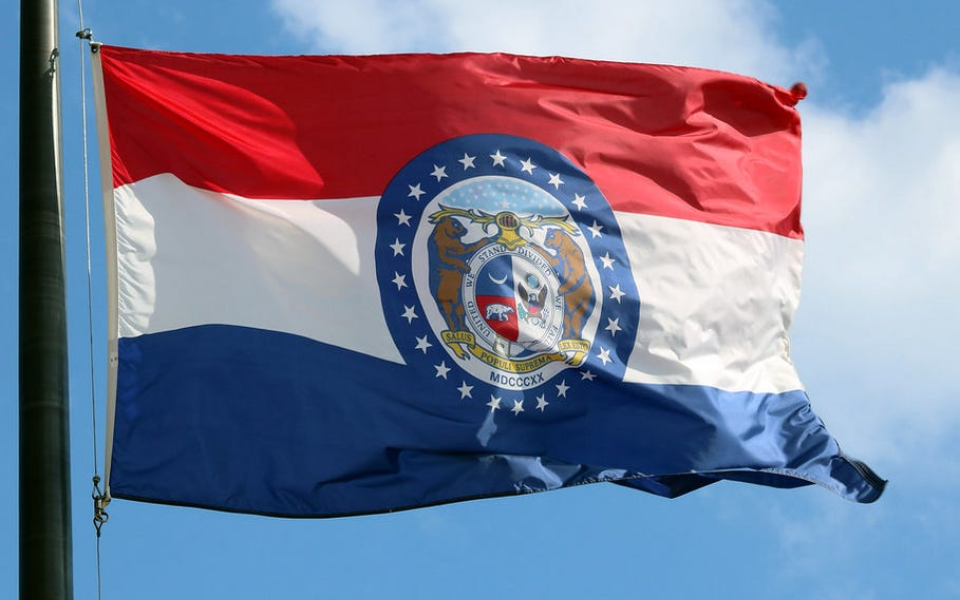
Wednesday, in an important victory for election integrity and fair representation, the Republican National Committee (RNC), the National Republican Congressional Committee (NRCC), and the Missouri Republican Party (MOGOP) worked together with the MO Solicitor General to help secure a critical court ruling that defeated Democrats’ latest attempt to overturn the state’s lawfully enacted congressional maps passed by the legislature and signed into law in 2025.
“This is a resounding victory for Missouri voters and election integrity,” said RNC Chairman Joe Gruters. “The court rejected Democrats’ latest scheme to overturn lawful congressional maps and create chaos ahead of the election. Missouri’s maps were fairly enacted by the legislature, upheld in court, and used in this year’s primary election. Today’s ruling makes clear those maps will stand.”
The Circuit Court of Cole County Judge Daniel Green ruled that the state’s referendum process does not apply to congressional redistricting, allowing the new Republican-drawn boundaries—already used in the August primaries—to govern the November 2026 midterm elections. State Senator Rick Brattin won the Republican nomination in the redrawn District 5 with 45% of the vote in a crowded GOP six-candidate field. He will face incumbent Emanuel Cleaver.
While in the State Senate, Brattin has been a prominent supporter of stricter election security measures, sponsoring and voting for legislation requiring voter ID, supporting bans or restrictions on drop boxes and certain forms of mail-in voting, working to prohibit private funding of election offices (“Zuckerbucks”), and advocating for cleaner voter rolls and processes allowing citizens to trigger election audits/recounts. In 2022, he publicly stated that “there is no issue more pressing to our country than the integrity of our elections” and that Missouri should have “the strongest election laws in the country.”
The Aug 19 ruling upheld Secretary of State Denny Hoskins’ decision to block Dems referendum aimed at overturning Missouri’s new congressional map. On Aug 4, Hoskins rejected the referendum.
Democrats and progressive national activist groups have already spent more than $6 million trying to overturn Missouri’s maps in court, and lost.
This outcome is vital for Republicans seeking to retain their majority in the U.S. House. By protecting a map that shifts Missouri’s delegation from a 6-2 Republican edge to a projected 7-1 advantage, primarily by redrawing the Kansas City-based district long held by Democrat Emanuel Cleaver into a solidly Republican-leaning seat, the decision prevents last-minute chaos and preserves the will of the legislature and voters who have already participated under these lines. In a midterm environment where control of Congress hangs in the balance, every protected seat matters, and this ruling strengthens the GOP.
Plaintiff Richard von Glahn, longtime progressive activist and labor organizer in Missouri and executive director of People Not Politicians, immediately appealed the decision to the MO State Supreme Court. Yesterday, Chief Justice Brent Powell granted the request and issued an order setting an expedited briefing schedule and oral arguments for the case on Sept. 2.
The County Circuit Court ruling is a huge victory for Secretary of State Denny Hoskins, a strong advocate for the new map.
Hoskins said, “The Missouri First Map remains the law of the land.” That’s the name proponents have used to describe the redistricting plan aimed at ousting Cleaver from office.
Also Wednesday, Green blocked a plan from the ballot known as the Respect Missouri Voters initiative. It would make it more difficult for the legislature to overturn voter-approved measures. Plaintiffs appealed that decision to the MO Court of Appeals. The MO Supreme Court subsequently ordered the appeal transferred to itself.
Oral arguments in the case are also scheduled for Sept 2. A final decision in both cases is expected by the Sept 8 deadline to place measures on the November 2026 ballot.
“I’m 2-for-2 today and still batting a thousand,” Hoskins said. “Federal law is very clear that the Missouri Constitution cannot be interpreted to strip the General Assembly of its authority to conduct redistricting of congressional maps. I do not believe the Founding Fathers intended to have a referendum on a congressional redistricting map, and I’m pleased that Judge Green is in agreement.”
Republican Missouri Gov. Mike Kehoe, celebrated Wednesday’s decision in a social media statement, calling Green’s decision a “quick, common-sense ruling.” “Missourians voted for candidates using this map in August, and they deserve the ability to elect those candidates in November,” he said.
Beyond Missouri, steadily Republican-led states have secured meaningful redistricting advantages for 2026 through mid-decade map revisions in response to the many population shifts and political realities since the 2020 elections.
Similar efforts in Texas, North Carolina, Ohio, Florida, Tennessee, Louisiana, and Alabama have collectively positioned the GOP for realistic gains of about 10 House seats overall, while Democratic counter-efforts have yielded far fewer net advantages (CA and UT).
These new mid-decade maps eliminate Democratic strongholds in key areas, create more efficient Republican vote distributions, and reflect stronger conservative leanings based on 2024 presidential results—giving Republicans a decisive edge heading into November.
Democrats have been redistricting (gerrymandering) states’ congressional maps for decades, maxing out their potential. E.g., New England Democrats control ALL 21 House seats spread across six states (not a single GOP representative). It is estimated that if both parties MAXXED OUT on gerrymandering, the U.S. Congress would end up with 262 Republicans to 173 Democrats.
Finally, Republicans are fighting back and it is paying off! The table below shows redistricting activity between the 2024 and 2026 elections as well as the current pre-redistricting U.S. House delegation in each state, and projected 2026 gains.
The current party breakdown in the House is 219 Republicans to 212 Democrats (including one Independent who caucuses with Republicans) with 4 vacant seats (special elections are ongoing or scheduled for some of them).
The latest Cook Political Report rates 211 seats as leaning Republican or likely R wins in November, to the Ds’ 205, leaving 18 toss-ups (14 held by the GOP and 4 by the Democrats. Most often, the party not holding the Presidency does better in midterm House elections, with a few exceptions, including Dems picking up seats in 1998 and the GOP in 2002. The GOP looks to add 2026 to the list…
These court victories are incredibly important, and the RNC deserves sincere thanks for its steadfast legal work all across the country.
Under Chairman Joe Gruters, the RNC continues to fight relentlessly to protect voters. This commitment to election integrity and competitive fairness not only safeguards Missouri’s contribution to the national majority but bolsters the broader Republican effort to maintain House control in 2026.
Great job intervening in the Missouri case alongside the National Republican Congressional Committee and state party allies to uphold the Constitution, reject frivolous legal maneuvers, and ensure that duly passed legislation stands.
The RNC is currently engaged in 170+ election integrity lawsuits across 37 states.
Also, yesterday, the RNC appealed a district judge’s ruling to the Nebraska Supreme Court that upheld the validity of a state law allowing certain UOCAVA overseas voters to vote. The case involves a state law dating back to 2005 that allows U.S. citizens who have never resided in Nebraska but have a parent registered to vote in one NE county to register in that county. It would be a felony to register or vote in multiple states or counties.
The RNC argues the law “dilutes the votes of lawful Republican voters” and violates Article VI, Section 1 of the Nebraska Constitution, which defines a qualified voter as a U.S. citizen who “has resided within the state and the county and voting precinct for the terms provided by law.”
The NE case brings the total to eight similar RNC lawsuits filed so far, with one victory. On May 26, a Wake County Superior Court judge ruled in favor of the RNC, reaffirming that only individuals who have actually resided in North Carolina may vote there. That decision struck down North Carolina Board of Elections (NCSBE) practices allowing “never residents”—typically U.S. citizens born abroad whose parents previously lived in the state—to register and cast ballots, upholding the clear residency requirements in the state constitution.
Share This Post...